


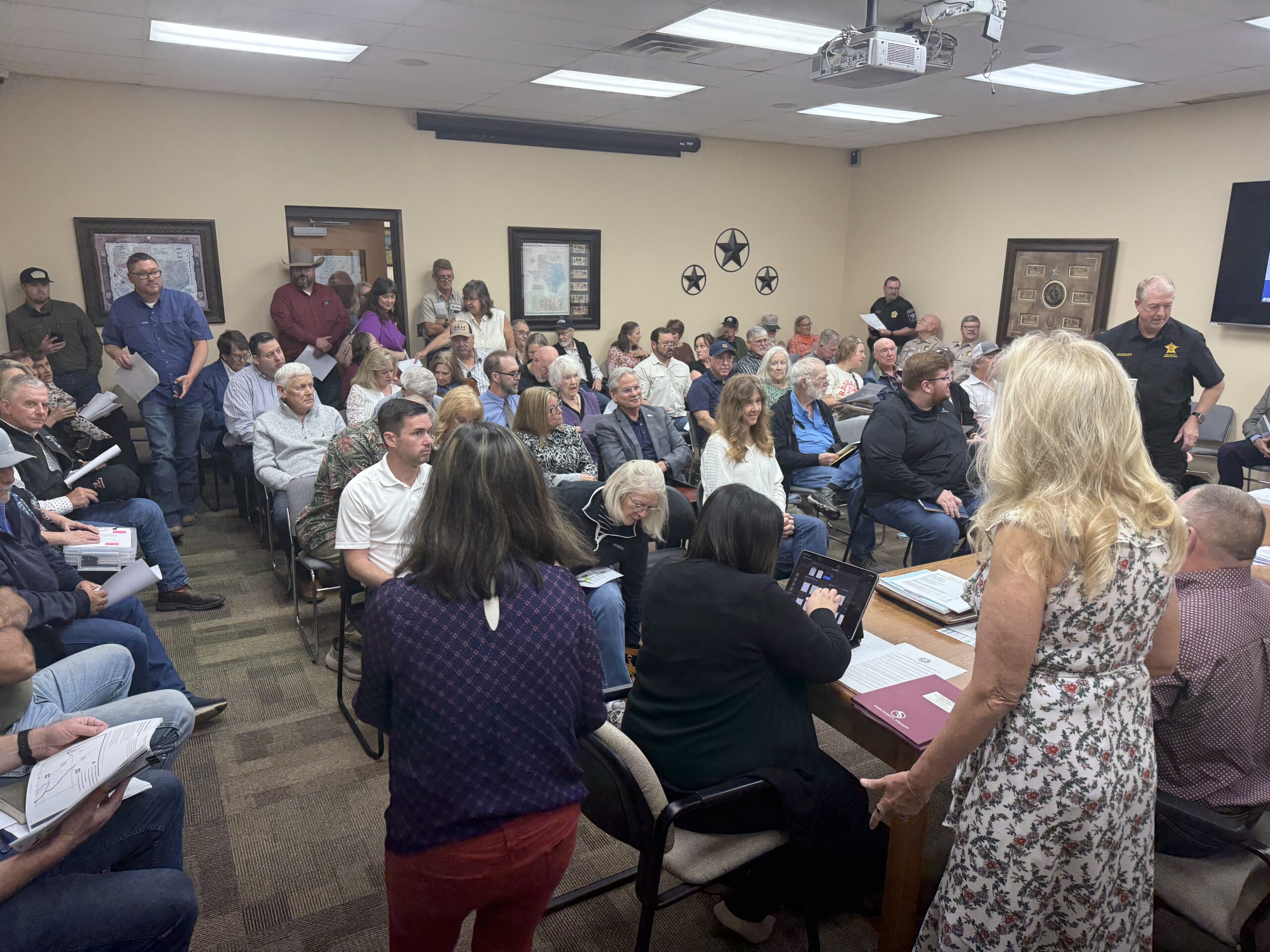
The Wise Moves Thoroughfare Master Plan — a document commissioned to guide and shape the expansion of Wise County’s road network amid rapid population growth — was adopted by Wise County commissioners Monday following a public hearing that drew feedback from dozens of residents.
With their unanimous vote to adopt the measure, county leaders will now work to incorporate the plan’s expanded corridors and connectors into the North Central Texas Council of Governments’ Regional Mobility Plan 2050 update, a step that could help advance funding and planning for priority roadway improvements identified in the study.
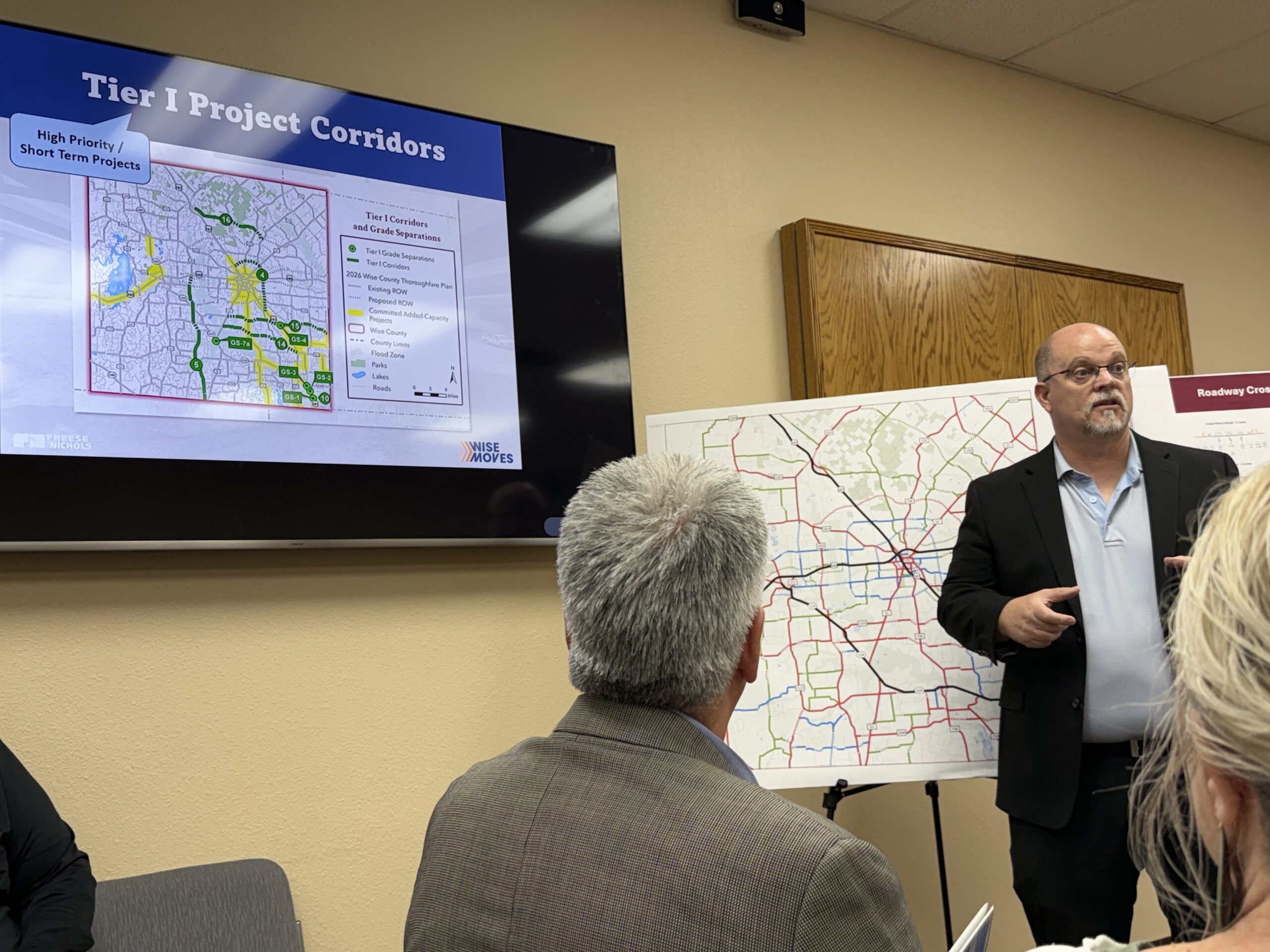
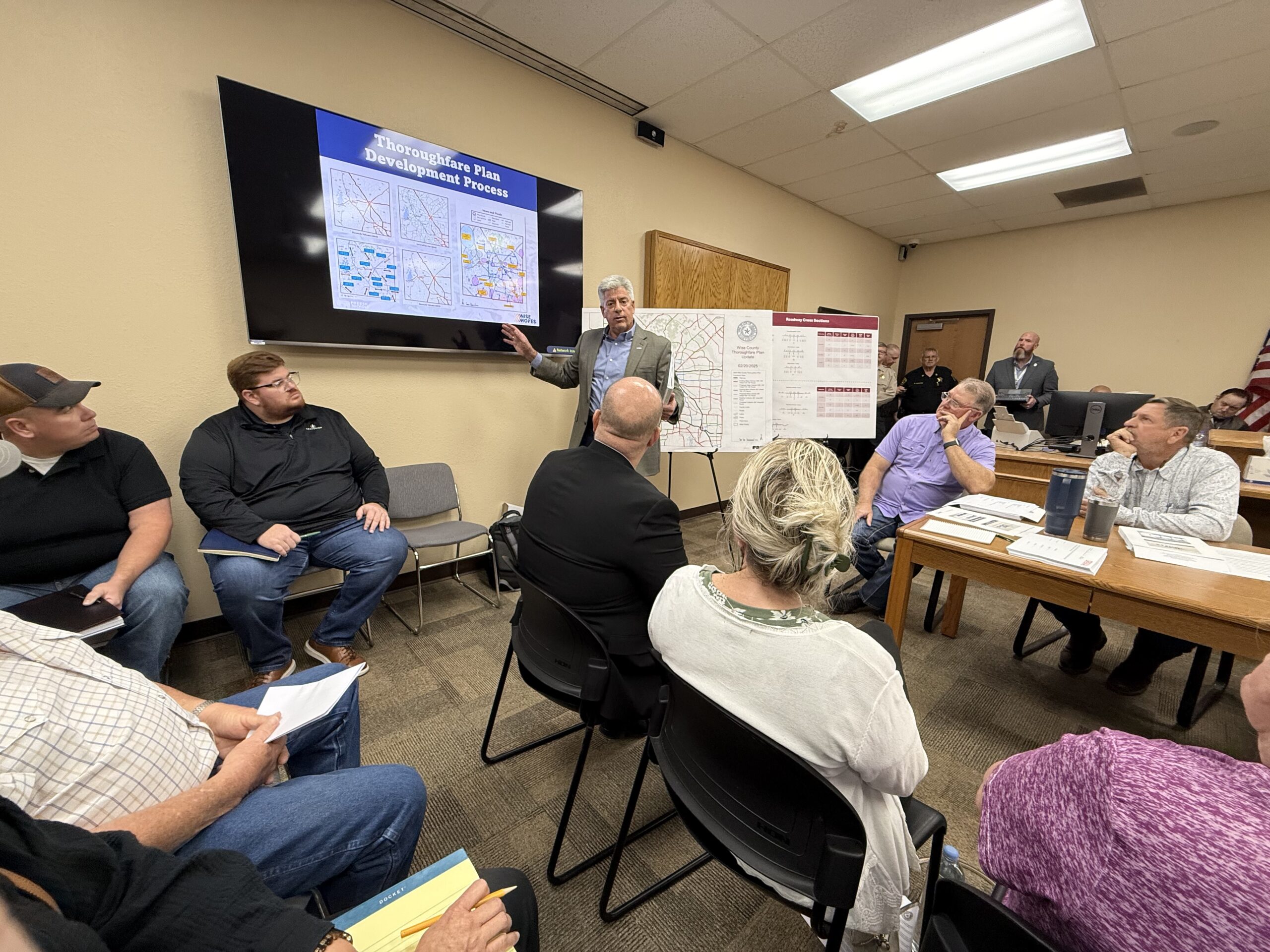
Freese and Nichols transportation planning manager Edmund Haas and transportation planner Brian Crooks presented the plan, described as a living document that will require updates every five to 10 years. Work on the update began in February 2025 and included commissioner input sessions, project coordination meetings, stakeholder interviews, a developers roundtable, steering committee meetings and two town hall meetings. Revisions from those discussions were incorporated into the final version adopted Monday.
Updating the plan became a priority as new housing development continues to surge. More than 25,000 homes are currently in various stages of planning across the county.
Wise County’s population, estimated at about 85,000 today, is projected to grow to 171,200 by 2050, according to the North Central Texas Council of Governments — a figure Pct. 4 Commissioner Colby Shawn described as a conservative estimate.
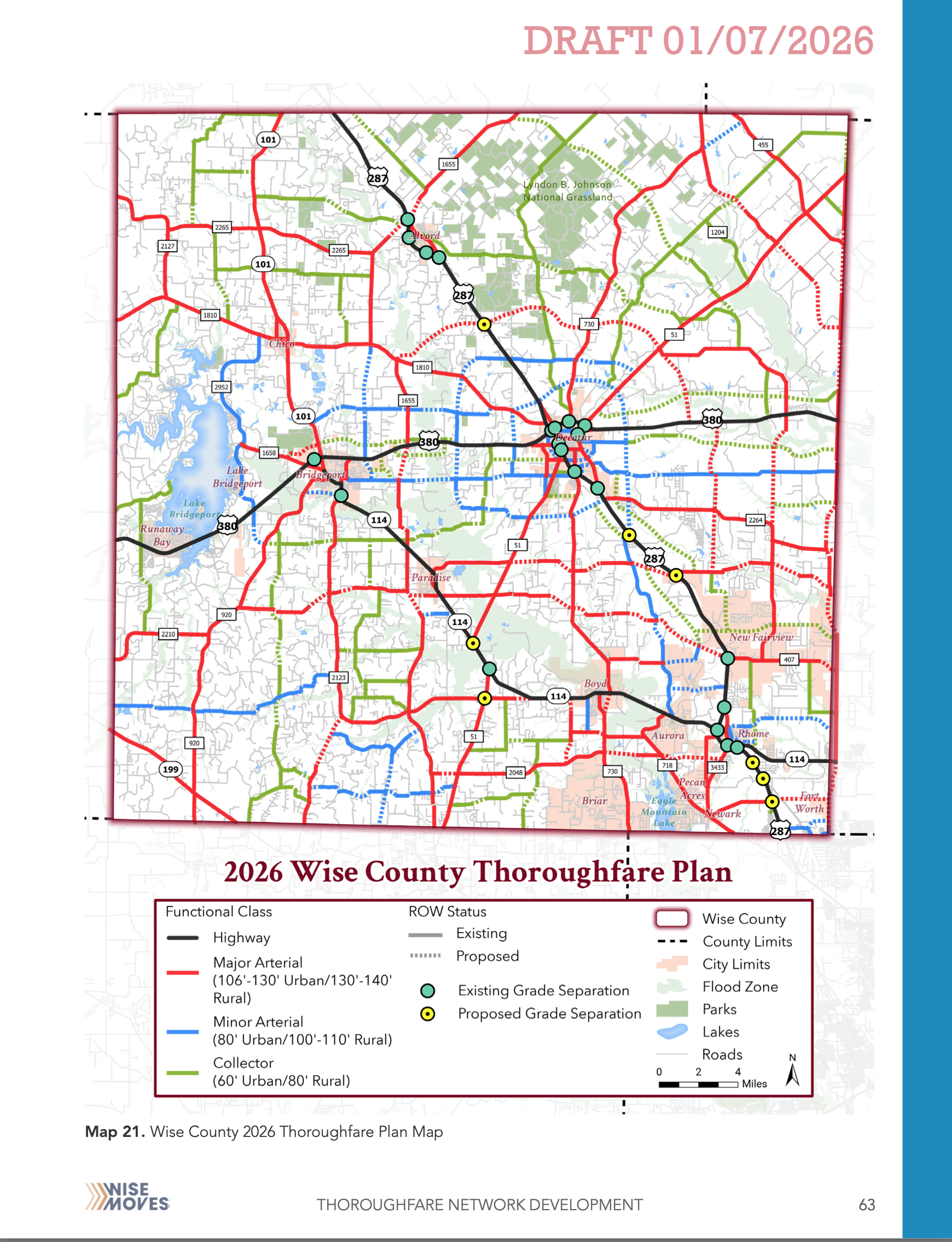
Preparing for that growth drove many of the proposed improvements, which include 16 new corridors and multiple overpasses intended to relieve congestion and improve safety across the county.
Major routes targeted for relief include U.S. 380, U.S. 81/287 and Texas 114. The plan proposes new north-south corridors paralleling U.S. 287, Farm Road 51, Farm Road 730 and Texas 114, along with improvements to roads such as County Line Road and Schoolhouse Road to create more continuous travel routes.
Additional east-west connections would link U.S. 287 and Texas 114 through upgrades to roads such as Ramhorn Hill Road, FM 407, FM 2264 and FM 1810, along with new collector routes running parallel to U.S. 380.
The plan also recommends seven grade separations — six along U.S. 287 and one along Texas 114 at FM 51 — to improve traffic flow and safety. County officials said the additional corridors would also support economic development, create alternate routes around major highways and improve access to destinations such as Lake Bridgeport and the LBJ National Grasslands.
About 90 people attended Monday’s meeting, and the public comment portion of the thoroughfare plan hearing lasted roughly 90 minutes.
The vast majority of residents who spoke asked how the dotted and solid lines on the map would affect their property, with most identifying projects in the plan’s Tier III category. Haas said those projects represent broadly focused potential improvements 20 to 40 years in the future and will likely look very different by the time they are pursued.
Haas said those recommendations were drawn with long-term development trends in mind and would typically only become necessary if large tracts of land they’re surrounded by on the map are sold and subdivided.
“If you don’t sell your property, we wouldn’t need to build a road through your coastal field,” Haas said. “We drew up the Tier III recommendations thinking decades ahead, attempting to be proactive in the event that you or a family member does decide to sell.”
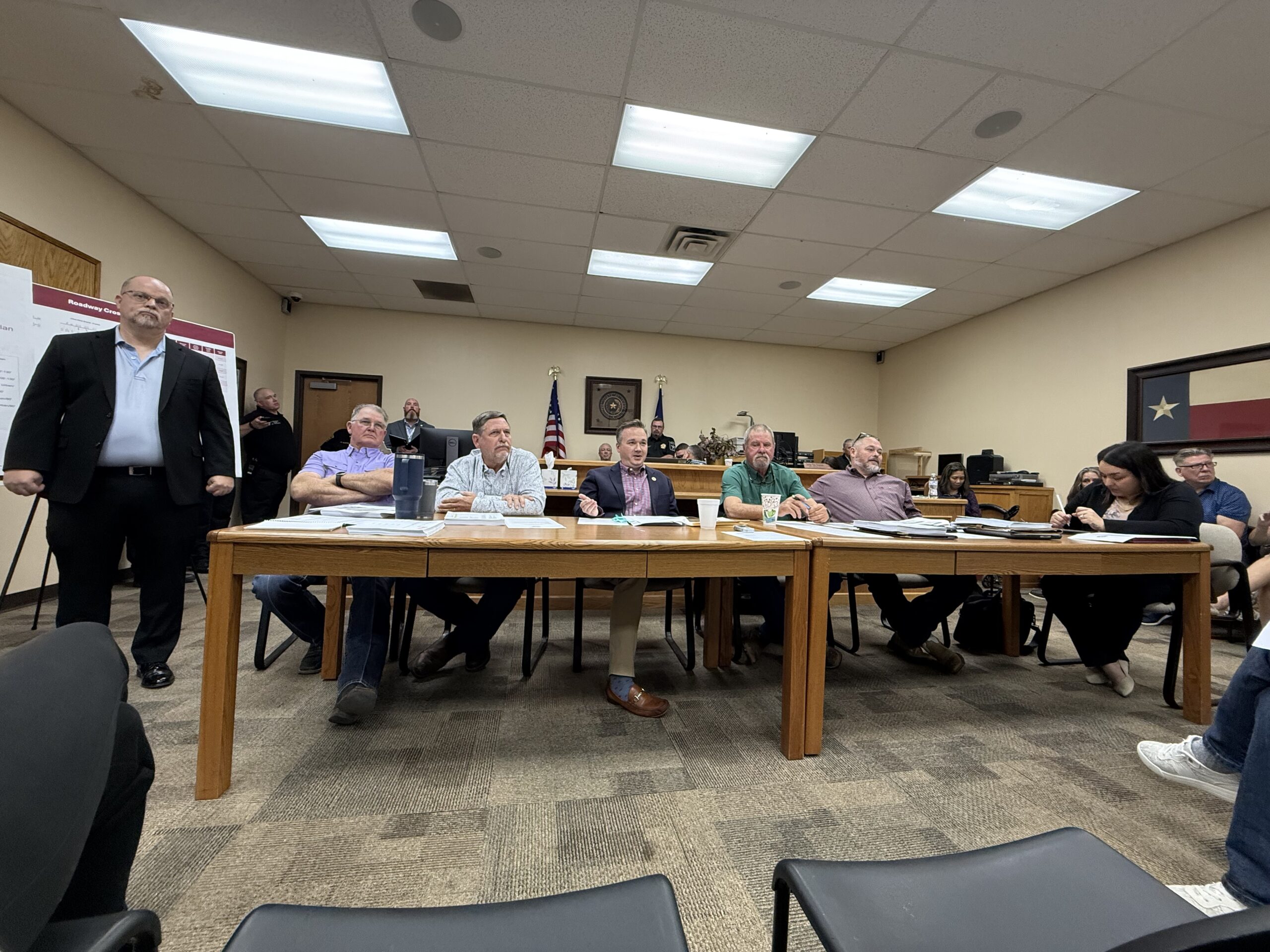
Wise County Judge J.D. Clark added that the current commissioners court has never used eminent domain and said that if any project were to affect residents’ property lines, the first step would be working out some form of compensation.
All residents who spoke also shared that they fully intended to keep their properties, many of which were described as multi-generational family farms, in the family.
If fully built out, the proposed improvements would add roughly 240 miles to the county’s roadway system. Major arterial mileage would increase from 321 miles to 406 miles, minor arterials from 79 miles to 143 miles and collector roads from 146 miles to 238 miles.
Projects in the plan are divided into three tiers based on priority and timeline. Tier I includes higher-priority, near-term projects, while Tier II and Tier III identify longer-term improvements intended to complement the initial work.
Freese and Nichols recommended the county review and update the plan to account for development changes and adjust long-range projects.
In addition to considering floodplains, land use and coordination with municipal and regional planning efforts, planners said crash and congestion data played a major role in shaping the overhaul.
By 2045, the study found that nearly all of U.S. 287 and Texas 114 are projected to experience severe congestion without major improvements.
How those projects will ultimately be funded remains uncertain.
Freese and Nichols recommended the county continue coordinating closely with TxDOT and the North Central Texas Council of Governments to keep priority projects “shovel-ready” as funding opportunities arise.
The plan also encourages exploring new local funding options, such as bond programs or dedicating a portion of property tax revenue to transportation improvements, and pursuing state and federal grants.
The full plan and additional information about the thoroughfare update are available on the Wise County website at www.co.wise.tx.us.
Loading Comments